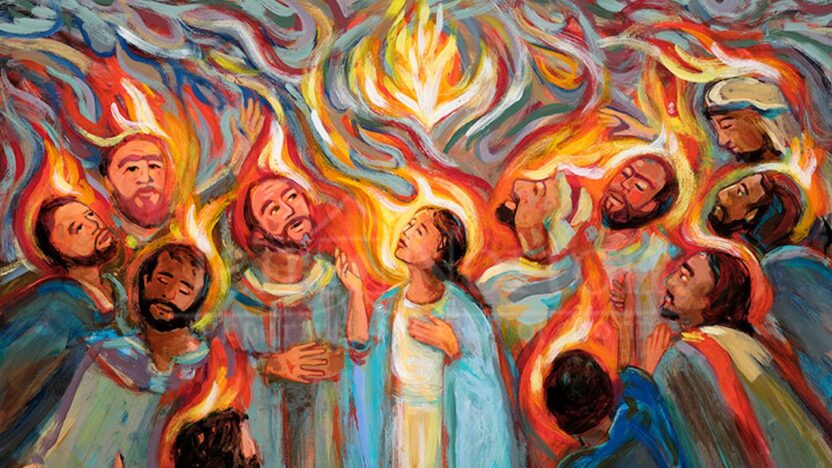
You Are the Temple


I was honored to preach this message at the Living Hope International Ministries Men’s Conference 2026. Click here for the audio recording of my sermon.

But you will receive power when the Holy Spirit has come upon you, and you will be my witnesses in Jerusalem, in all Judea and Samaria, and to the ends of the earth.

-Acts 1:8

Exodus tells the story of how God led the Israelites out of slavery in Egypt to bring them to the Promised Land and make a covenant with them, that they would be his people and he would be their God. When God brought them out of slavery in Egypt, he brought them to a mountain in the Sinai Peninsula, called Mount Sinai.

On the third new moon after the Israelites had gone out of the land of Egypt, on that very day, they came into the wilderness of Sinai. They journeyed from Rephidim, entered the wilderness of Sinai, and camped in the wilderness; Israel camped there in front of the mountain. Then Moses went up to God; the LORD called to him from the mountain, “Thus you shall say to the house of Jacob and tell the Israelites: ‘You have seen what I did to the Egyptians and how I bore you on eagles’ wings and brought you to myself.Now, therefore, if you obey my voice and keep my covenant, you shall be my treasured possession out of all the peoples. Indeed, the whole earth is mine, but you shall be for me a priestly kingdom and a holy nation.’ These are the words that you shall speak to the Israelites.”

So Moses went, summoned the elders of the people, and set before them all these words that the LORD had commanded him. The people all answered as one, “Everything that the LORD  has spoken we will do.” Moses reported the words of the people to the LORD . Then the LORD  said to Moses, “I am going to come to you in a dense cloud, in order that the people may hear when I speak with you and so trust you ever after.”

When Moses had told the words of the people to the LORD, 10 the LORD said to Moses, “Go to the people and consecrate them today and tomorrow. Have them wash their clothes 11 and prepare for the third day, because on the third day the LORD will come down upon Mount Sinai in the sight of all the people. 

16 On the morning of the third day there was thunder and lightning, as well as a thick cloud on the mountain and a blast of a trumpet so loud that all the people who were in the camp trembled.17 Moses brought the people out of the camp to meet God. They took their stand at the foot of the mountain. 18 Now all of Mount Sinai was wrapped in smoke, because the LORD had descended upon it in fire; the smoke went up like the smoke of a kiln, while the whole mountain shook violently. 19 As the blast of the trumpet grew louder and louder, Moses would speak and God would answer him in thunder. 20 When the LORD descended upon Mount Sinai, to the top of the mountain, the Lord summoned Moses to the top of the mountain, and Moses went up. 

-Exodus 19:1-11, 16-20

This is this incredible scene where God’s presence comes down upon the mountain in this incredible manifestation of fire and smoke and cloud, not with a still small voice, but with a loud trumpet blast, and thunder, and the whole mountain shook.

Of course, God is invisible, but God made these visible signs manifest to prove to the Israelites that God is in this place. This mountain – which is just a large hunk of rock, really no different than any other mountain in the region geologically speaking – but it suddenly became very special, it suddenly became sacred ground, even to this day, this mountain is considered holy. It’s holy because it’s where God’s presence is, as manifest by the fire and the smoke and the cloud, everyone knew that God was in this place. And Moses went up and met God on the mountain.

And when Moses came down from that mountain, his face was radiant and glowing, so much so that they had to put a veil over his face because it was freaking people out. So there is this powerful manifestation of God’s presence on the mountain. The people encounter God there.

Now, as the Israelites were travelling in the wilderness, they set up what they called the Tabernacle. The Tabernacle was like a temple, but it was mobile. It was basically a large tent, it’s also called the Tent of Meeting, and they could set it up, worship God, and then move it from place to place as God instructed and as God led them throughout their journey in the wilderness to the Promised Land.

Turn to Exodus 40. This is the record of when they dedicated the Tabernacle for holy use. The presence of God filled the Tabernacle and made the Tabernacle holy.

We see this in Exodus 40, when they dedicate the Tabernacle and God shows up:

When they went into the tent of meeting and when they approached the altar, they washed as the LORD had commanded Moses. He set up the court around the tabernacle and the altar and put up the screen at the gate of the court. So Moses finished the work.

-Exodus 40:32-33

Now this work of building the Tabernacle was no small task. And there are numerous chapters detailing the construction of the Tabernacle and all of the craftsmanship that went into it, and all the materials it was made of – we don’t have time to get into all of that, but just understand that building the Tabernacle was a major undertaking for the people to do, especially doing so in the wilderness with limited resources.

Of course the Tabernacle was made of ordinary materials, there was some gold utensils and implements that were used, but for the most part it was wood and fabric and other ordinary materials, nothing particularly special about what the Tabernacle was made of, but when consecrated for holy use those ordinary objects became holy. Why did they become holy? Because God was there. Because God’s presence made the Tabernacle holy.

And we see God show up, and his presence manifest at the dedication of the Tabernacle, just like we saw at Sinai:

Then the cloud covered the tent of meeting, and the glory of the LORD filled the tabernacle.

-Exodus 40:34 

Remember how there was a cloud on Sinai? We see this also at the Tabernacle. Just like God’s glory was manifest at Sinai, God’s glory filled the Tabernacle and it confirmed for the people that God was in this place, that God’s presence dwelled in this place.

Moses was not able to enter the tent of meeting. He was able to go up to Sinai, even though the mountain was literally on fire. But in this case, this visible glory of God – whatever that looked like, and we can’t even imagine it – this glory was so thick that they couldn’t even go into the tent.

Moses was not able to enter the tent of meeting because the cloud settled upon it, and the glory of the LORD filled the tabernacle. Whenever the cloud was taken up from the tabernacle, the Israelites would set out on each stage of their journey, but if the cloud was not taken up, then they did not set out until the day that it was taken up. For the cloud of the LORD was on the tabernacle by day, and fire was in the cloud by night, before the eyes of all the house of Israel at each stage of their journey.

-Exodus 40:35-38

Again, what are these elements, these manifestations that God used to confirm to the people that God was dwelling in this place? Cloud. Smoke. Fire. We saw it at Sinai. We saw it again when they dedicated the Tabernacle.

Now, this generation passed away. They wandered in the wilderness for 40 years because of their unbelief, and the next generation entered the Promised Land, not having seen God’s presence manifest at Sinai, not having been around for the dedication of the Tabernacle.

After entering the Promised Land, there was a period of Judges, and eventually the people demanded a king. And God said, “I am your king.” But the people wanted a human king like all the other nations had. So God gave them King Saul.

Now Saul did evil in the eyes of God, so God removed him as king and installed King David. David, despite some failures and some sins, was, overall a righteous king, a man after God’s own heart.

And David desired to build for God a house, a temple where people could worship God, could experience God, could encounter God.

Of course, God kind of laughed at this, he said, even the heavens of the heavens cannot contain me, and you want to build me a house?

And God said to David, “I know you want to build me a house, but I’m gonna build you a house.” And God made a covenant with David and promised him that from his household would come the Messiah, the king who would rule the world forever and make everything wrong with the world right. And we know that Messiah is Jesus.

But David’s heart was, “I want there to be a dedicated place where people can encounter God.”

In generations past, they had Sinai, they had the Tabernacle, they had these dedicated places that God had confirmed through these manifestations of fire and smoke and cloud, that his presence dwelled there, that people could worship and experience God in that holy place.

But the Tabernacle was only a temporary tent. David wanted to build a permanent Temple for God. But David, ultimately, did not finish the work of the Temple because he had too much blood on his hands from the many wars he had fought, so it was not appropriate for him to build a Temple.

But David’s son Solomon took up that work, and built the Temple. And picking up in the 2 Chronicles 5:

Thus all the work that Solomon did for the house of the LORD was finished. Solomon brought in the things that his father David had dedicated and stored the silver, the gold, and all the vessels in the treasuries of the house of God.

2 Chronicles 5:1

Building the Temple was a massive amount of work, even far beyond the work of the Tabernacle. Again, it’s described in great detail in the Bible, we don’t have time to get into all of it, but the Temple was a massive structure with incredibly intricate craftsmanship. It took many years to build. Finally, when the work was finished, Solomon brought in the things that his father David had dedicated for the Temple. These are holy implements that God had ordained would be used in the worship of him. These are holy objects that signify God’s presence dwelling with his people.

Then Solomon assembled the elders of Israel and all the heads of the tribes, the leaders of the ancestral houses of the people of Israel, in Jerusalem, to bring up the ark of the covenant of the Lord out of the city of David, which is Zion. And all the Israelites assembled before the king at the festival that is in the seventh month. And all the elders of Israel came, and the Levites carried the ark. So they brought up the ark, the tent of meeting, and all the holy vessels that were in the tent; the priests and the Levites brought them up.

2 Chronicles 5:2-4

Again, this ark of the covenant, if you’re not familiar with it, this was a holy object that the Israelites had carried with them when they journeyed to the promised land. And on top of the ark were two golden angels called cherubim, and it says that the presence of God dwelled between the cherubim. And inside the ark were holy objects including the stone tablets inscribed with the Ten Commandments.

King Solomon and all the congregation of Israel, who had assembled before him, were before the ark, sacrificing so many sheep and oxen that they could not be numbered or counted. Then the priests brought the ark of the covenant of the LORD to its place, in the inner sanctuary of the house, in the most holy place, underneath the wings of the cherubim. For the cherubim spread out their wings over the place of the ark, so that the cherubim made a covering above the ark and its poles. The poles were so long that the ends of the poles were seen from the holy place in front of the inner sanctuary, but they could not be seen from outside; they are there to this day. There was nothing in the ark except the two tablets that Moses put there at Horeb, where the Lord made a covenant with the people of Israel when they came out of Egypt.

Now when the priests came out of the holy place (for all the priests who were present had sanctified themselves, without regard to their divisions), all the Levitical singers, Asaph, Heman, and Jeduthun, their sons and kindred, arrayed in fine linen, with cymbals, harps, and lyres, stood east of the altar with one hundred twenty priests who were trumpeters. It was the duty of the trumpeters and singers together to make themselves heard in unison in praise and thanksgiving to the Lord, and when the song was raised, with trumpets and cymbals and other musical instruments, in praise to the LORD,

“For he is good,
    for his steadfast love endures forever,”

the house, the house of the LORD, was filled with a cloud, so that the priests could not stand to minister because of the cloud, for the glory of the LORD filled the house of God.

-2 Chronicles 5:6-14

Can you imagine, after all the labor and the years of work that went into building this Temple, and they’re praying and crying out to God, “God, we want your presence, we want your presence to dwell in this place.” Can you imagine, after all the labor and all the work of building this Temple, finally, when this Temple is dedicated, the glory of God appears, and God confirms to his people through this manifestation of his glory, “This is where my presence dwells.”

And the glory was so thick that the priests couldn’t even minister because the glory was too intense. Does that sound familiar? This is what happened at the tabernacle. Moses couldn’t even go into the tent because the glory was so explosive. And that’s what happened here.

God’s presence came down to sanctify what had been ordinary gold, ordinary stone, ordinary wood, now had become this holy place where God’s presence dwells.

Now on chapter 6 King Solomon prays this amazing prayer. I don’t have time to read it. I highly recommend that you read it on your own time.

But we’ll pick up here in chapter 7:

God signified his presence not only with a cloud, not only with his glory whatever that looked like (we don’t know exactly what it looked like, but it was something so radiant that Moses’ face shined and they couldn’t even go into the Tabernacle or the Temple), but God also signified his presence with fire coming down.

When Solomon had ended his prayer, fire came down from heaven and consumed the burnt offering and the sacrifices, and the glory of the Lord filled the temple. 

-2 Chronicles 7:1

Now, did fire always come down to consume burnt offering any time they offered burnt offerings to God?

No. There are other times when fire came down – for example, Elijah called down fire from heaven during his showdown with the prophets of Ba’al.

So yes, there were miraculous occurrences when fire literally came down from heaven. But fire did not always come down. There were many sacrifices that were just routine sacrifices, where the priests would light the fire themselves, as was their duty. I would posit that most of the sacrifices throughout the centuries were like that, fire did not come down.

But this first time, this first time the temple was dedicated, fire came down. God sent fire down at the dedication of the Temple, just to signify to his people, “I am God. I am here. I am in this place. This is where my presence dwells.”

The priests could not enter the house of the LORD because the glory of the LORD filled the Lord’s house. When all the people of Israel saw the fire come down and the glory of the LORD on the temple, they bowed down on the pavement with their faces to the ground and worshiped and gave thanks to the LORD, saying,

“For he is good,
    for his steadfast love endures forever.”

-2 Chronicles 7:2-3

So, remember, this is a new generation. They were not around when the Tabernacle was dedicated. They were not round at Sinai. They grew up hearing the stories, hearing the legends, probably also singing songs about how God’s fire came down at Sinai, how God’s glory showed up at the Tabernacle, but they had never seen these manifestations of God’s presence with their own eyes.

So when the Temple is dedicated, again, after all the years of labor and work that went into it, they finally dedicate this Temple, and it’s almost a moment of suspense. Like, are the stories of our ancestors true? Like, is God going to show up again for his people like he did at Sinai? And everyone is waiting in great expectation. And then, all of a sudden, BOOM, fire comes down. And God confirms his covenant with his people. It’s as if God is saying to his people: “I am God. I am here. This is where my presence dwells.”

Now turn to Acts 1.

To set the scene, Jesus has been crucified. He’s been raised from the dead. He’s appeared to his disciples. And he’s about to be taken up into heaven to rule and reign as the King of kings at the right hand of God until God puts all things under his feet.

In the first book, Theophilus, I wrote about all that Jesus began to do and teach 

-Acts 1:1

Now, the Book of Acts was written by the same guy who wrote the Book of Luke. So this is Luke writing, and he’s saying here, “Hey, in my first book, the Book of Luke, I told you all about the things that Jesus during this earthly ministry – his teachings, his crucifixion, his resurrection – and now I’m picking up the story here right before his ascension.”

until the day when he was taken up to heaven, after giving instructions through the Holy Spirit to the apostles whom he had chosen.

-Acts 1:2

Remember, the apostles were just ordinary people. Today we look at them as being these great apostles. But remember, they were literally fishermen. They were uneducated. Some of them may have been educated. At least one was a tax collector. But for the most part they were working class guys who worked ordinary trades. But when Jesus said, “Come, leave everything, follow me, and I will make you fishers of men” they literally left everything and followed him. It was their faith that made them great, not their education or wealth or talents.

So Jesus chose these 12 ordinary guys to be his apostles. And right before Jesus ascended, he gave instructions to these apostles he had chosen:

After his suffering he presented himself alive to them by many convincing proofs, appearing to them during forty days and speaking about the kingdom of God.

-Acts 1:3

We don’t have time to get into it, but over that period of 40 days – and 40 is a very important number in the Bible – Jesus appeared to many people in many different ways. There were so many incredible resurrection appearances that confirmed and proved that God had truly raised his Son from the dead.

And what does it say Jesus spoke about in these resurrection appearances? It says he spoke about the kingdom of God. The kingdom of God is the gospel that Jesus preached. The Bible says that everywhere Jesus went, he preached the same message: “Repent, for the Kingdom of God is at hand.” There’s this kingdom coming where everything wrong with the world will be made right. A kingdom with a righteous King – Jesus Christ – who will judge the world in righteousness and restore peace and justice to the earth and everything wrong with the world will be made right. This good news of the Kingdom of God is the message that Jesus preached everywhere he went, both before and after his resurrection.

While staying with them, he ordered them not to leave Jerusalem but to wait there for the promise of the Father. “This,” he said, “is what you have heard from me; for John baptized with water, but you will be baptized with the Holy Spirit not many days from now.”

So when they had come together, they asked him, “Lord, is this the time when you will restore the kingdom to Israel?”

-Acts 1:4-6

Now, this was not a stupid question. He had already died and been raised from the dead. He’s in Jerusalem. So they’re thinking, “This is it! This is the moment when God is going to put Jesus on the throne, as had been promised to David in the Old Testament, that a Messiah would come to rule the world forever and establish peace and justice on the earth forever”

He replied, “It is not for you to know the times or periods that the Father has set by his own authority.

-Acts 1:7

In other words, it was not yet time. It was not yet time for God’s Kingdom to fully come. There’s this gospel message that must go out first throughout the world to give people an opportunity to believe and repent and be accepted into this Kingdom before the end comes.

But you will receive power when the Holy Spirit has come upon you, and you will be my witnesses in Jerusalem, in all Judea and Samaria, and to the ends of the earth.”

-Acts 1:8

What does that mean? They’re in Jerusalem, right? So Jerusalem means, “right here where we are.”

Jerusalem was in the Roman province of Judea, so Judea means, “the surrounding region.”

Samaria was farther to the north, so Samaria means, “places that are farther away.”

And then, the ends of the earth, the farthest places of all.

So we see these concentric circles that the gospel message will pass through as it goes forth, starting in Jerusalem, and rippling outwards around the world.

To put it in our context, we could say that we are called to be his witnesses, here in the Capital Region, and in all of New York State, and in all of the United States, and to the ends of the earth.

“You will be my witnesses right here where you are… and a little bit farther away… and a little bit farther away… and so on all the way to the ends of the earth.”

You will bear witness of this great gospel message, this gospel of the Kingdom.

So how do they do that?

Well, it’s not by man’s strength. It’s not my trying to come up with cleverly devised sermons or arguments to spread the message.

This is by the power of the Spirit of God working through God’s people.

We see this in Acts 2. This passage may be familiar to you. I hope it’s familiar to you. It’s the record of the Day of Pentecost.

But I want us to read this record in light of these manifestations of God’s presence that we just saw at Sinai, at the dedication of the Tabernacle, and at the dedication of the Temple.

When the day of Pentecost had come, they were all together in one place. And suddenly from heaven there came a sound like the rush of a violent wind, and it filled the entire house where they were sitting.

-Acts 2:1-2

Rushing wind. Have we heard that before? Yes. Rushing wind. That’s the first sign.

Divided tongues, as of fire, appeared among them, and a tongue rested on each of them.

-Acts 1:3

Where else have we seen fire?

Sinai.

I think we saw it at the Tabernacle. We definitely saw smoke.

And I know we saw it at the Temple, right? Fire came down.

So there’s these tongues of fire, and they’re hearing this rushing wind. They’re looking around, like, “what is going on here?”

And these tongues of fire are coming down, and resting upon them.

 All of them were filled with the Holy Spirit and began to speak in other languages, as the Spirit gave them ability.

-Acts 1:4

This is absolutely incredible. This day of Pentecost. When God’s Spirit filled his people, signified by these signs – just like when God’s presence came to Sinai and filled the Tabernacle and the Temple – just like that, God’s presence is now dwelling among and in his people.

So there’s this connection between the Temple back then, and today, his people.

Now, this is not speculation, okay? I want to share with you a few verses of scripture.

When Jesus visited the Temple before his crucifixion, the people were marveling at how incredible the Temple was, and Jesus, in Matthew 24:2, Mark 13:2, and Luke 19:44, Jesus said, “There’s a day coming, in this very generation, when not one stone will be left upon another.”

Jesus also said, in John 2:19, “Destroy this temple, and in three days I will raise it up.”

Now, these were key statements that they used to bring charges of blasphemy against Jesus and sentence him to death by crucifixion. Why? Because they thought he was speaking against the Temple.

But what they didn’t understand was, when Jesus said, “destroy this temple and in three days I will raise it up,” the temple was speaking about was his own body.

And when he said, “not one stone will be left upon another,” that was true. Approximately 40 years after Christ’s ascension – and 40 is a very important number in the Bible – the Temple in Jerusalem was destroyed by the Roman Empire.

If you go to the site where the Temple once stood, you will not find a temple there today. You will actually find a Muslim mosque on that site.

The Temple in Jerusalem was destroyed in 70 A.D. and for almost 2,000 years, it has never been rebuilt.

And, depending on your eschatology and your understanding of the End Times, there’s all kinds of speculation and debate as to whether or not that Temple in Jerusalem will ever be rebuilt.

I don’t know the answer to that.

But what I do know is this: There is a temple today.

There may not be a temple in Jerusalem. But there is a temple today. And I’m gonna show you that from the scriptures.

Remember how Jesus spoke of his own body as being a temple? In 1 Corinthians 6:19-20, we find these incredible verses:

Or do you not know that your body is a temple of the Holy Spirit within you, which you have from God, and that you are not your own? For you were bought with a price; therefore glorify God in your body.

-1 Corinthians 6:19-20

Now, when many people read these verses, they think it means: take care of your body, eat right, and exercise.

And the Bible says in 1 Timothy 4:8 that physical exercise is of some value, but spiritual, much more.

Of course, we should take care of our bodies, which includes eating right, exercising, and, also, abstaining from sexual immorality, which is actually the context of what the Apostle Paul is talking about here.

But I believe there is a spiritual truth here that is far greater than merely taking care of our bodies.

Turn to Ephesians chapter 2.

So then, you are no longer strangers and aliens, but you are fellow citizens with the saints and also members of the household of God, built upon the foundation of the apostles and prophets, with Christ Jesus himself as the cornerstone; in him the whole structure is joined together and grows into a holy temple in the Lord, in whom you also are built together spiritually into a dwelling place for God.

-Ephesians 2:19-22

Wow. This is one of my favorite passages in the entire Bible.

This passage identifies the church – not the building, but the people of God – as a holy temple in the Lord, and the dwelling place for God.

And here in verses 20 and 21, I just love the way this is worded… God’s temple today is built upon the foundation of the apostles and prophets, Christ Jesus himself as the cornerstone… the whole structure joined together… it doesn’t say that it is a temple… it says it grows into a temple.

Another translation says, “is growing into a holy temple.”

It’s an active process. It’s not finished yet. God’s temple is continually growing with each new member of the body of Christ added in as the gospel message goes forth to the ends of the earth.

What a beautiful picture!

Where is God’s temple today?

You won’t find it in Jerusalem.

God’s temple today is his people. His church. His body of believers. His ekklesia – those who are called out from the world and into God’s Kingdom.

We are the temple today. We are a dwelling place for God.

To really understand what this means, you need to dig into the Old Testament and really understand how important the Temple was to the ancient Jews. The Temple was everything. It was not only where God was worshipped and sin was forgiven, it was where people experience the presence of God.

It was a place where people encountered God. Where they saw God work. Where they saw manifestations that God is real. Where they heard from God.

That’s how the Temple functioned in the Old Testament.

God today works through his people to accomplish that.

In other words, do people encounter God when they encounter us?

Do they see God working through us? Do they experience his love through us? Do they encounter in us and in our testimony, the evidence that God is real?

Jesus said in Matthew 18:20, “where two or three are gathered in my name, I am there among them.”

When people join believers who are gathered together like we are gathered here, do they encounter Jesus in our midst? Do they encounter his love? His truth? His word? His message?

If we want to shine as lights in the world, we need to unlock the truth of what it means that we are the Temple today.

I want to look at just one more verse and then we’ll go back to Acts 1:8 to close out.

In John 14:2, Jesus said, “In my Father’s house there are many dwelling places. If it were not so, would I have told you that I go to prepare a place for you?”

Now, when most people read this, they just substitute “heaven” for “Father’s house.” They picture Jesus up in heaven, preparing a room or mansion (King James Version translates “dwelling places” as “mansion”) for you up in heaven, you know, he’s fluffing the pillows and getting it ready for you.

We know that’s not what Jesus is talking about here. We know from the scriptures that a day will come when the dead will be raised, and our final destiny isn’t heaven, but eternal life on a renewed and perfected earth.

And of course, Jesus is preparing a place for us in that world to come.

But I wonder, in light of what we just read, if there is also a deeper spiritual meaning here, when you consider the fact that throughout the scriptures, “Father’s house” or “house of God” usually refers to the temple. Consider also that what was traditionally translated “rooms” or “mansions” is more accurately translated “dwelling places” like we see here in the New Revised Standard Versions.

Of course, the temple is the place where God dwelled. But here, Jesus is saying, in my Father’s house are many dwelling places.

Could it be, that Jesus is preparing a place for us in God’s temple, that we would actually become a dwelling place for God?

That God would dwell in Christ and Christ would dwell in you, through the Holy Spirit.

I’m not 100% convinced of this interpretation of John 14:2. But I think in light of everything we’ve just been reading, it’s worthy of thought.

Certainly, I think there’s a much deeper level of meaning and significance here, than merely saying that Jesus is prepping us to go to heaven.

This is so much deeper when we truly understand what it means that we are the dwelling place of God’s Spirit.

And God’s Spirit empowers us to be his witnesses.

We didn’t have time to read it, but in the Book of Acts, when the Holy Spirit came at Pentecost, there was the rushing wind and the fire came down, and people started speaking in other languages as the Spirit empowered them to do so.

And people were freaked out and wondering what’s going on. Are these people drunk?

And Peter got up and said, “No, they’re not drunk. This is to fulfill what was written in the prophet Joel, that in the last days God would pour out his Spirit on all flesh, that young men would dream dreams and old men would see visions.”

And Peter preached this incredibly powerful sermon. If you haven’t read it, please take time today to do so. It’s incredible. His preaches this sermon and thousands of people believe.

This is the same Peter who – only a few weeks earlier – denied that he even knew Jesus because he was too embarrassed to admit to a servant girl that he knew Jesus, on the night Jesus was arrested.

How did this Peter go from being a wimp, to being this incredibly bold preacher on fire for Christ, witnessing to thousands?

One thing changed.

The power and presence of God filled his people through God’s Spirit, empowering God’s people to be witnesses for him.

We are empowered by that same Spirit. The same power that raised Christ from the dead lives in us.

So, when we’re looking at Acts 1:8 and thinking about what it means to be witnesses for Christ… it’s not about how smart you are or how skilled you are.

Moses could barely get 2 words out. God worked with him.

It’s God’s power and presence working through you.

Just like God filled the Temple, God can fill you and empower you to be that witness.

Now, there are many excuses that Satan uses to stop us from being witnesses.

Tell me if you’ve ever heard one of these excuses before:

“I just don’t have the gift of an evangelist.”

“I just don’t know enough… what if they ask me a question I can’t answer?”

“I’m not good at apologetics or debating people.”

Now, it’s true that not everyone has the gift of an evangelist.

Not everyone is knowledgeable enough to be a teacher.

Not everyone is skilled in apologetics.

And that’s okay.

We are not all called to the occupation of an evangelist.

We are not all called to be teachers.

We are not all called to be apologetics people.

We are all called to be witnesses.

Being a witness doesn’t mean teaching or preaching sermons.

Being a witness doesn’t mean winning debates or arguments.

The definition of a witness is simple: “One who testifies to what he has seen and heard.”

That’s it.

When you understand what it means to be a witness, you realize that evangelism is actually a lot simpler than most people think.

I think sometimes we make it too complicated.

We think we need to have every answer, that we have to study endlessly before we’re prepared enough to do it, that we have to win every debate.

But here’s the good news.

We’re not all called to debate.

Jesus didn’t say, “you will be my debaters.”

You don’t need to have all the answers.

You don’t need to be a great teacher.

You don’t need to know everything.

If someone asks you a question about the Bible that you don’t know the answer to, it’s okay to say that you don’t know.

We are not called to know everything, or teach everything, or win every argument.

All we are called to do is this: testify to what you have seen and heard.

Have you seen God work in your life?

Tell someone about it.

That’s it.

It’s simple.

And it’s not about arguing with people.

When you testify to what you have seen and heard… other people might not believe you, but, you’re speaking from experience.

God empowers his people today through the working of the Spirit to be witnesses.

God will work through us to reach the world with his truth and his love, to the uttermost parts of the earth.

We can be those witnesses today by his grace.

“This is what God has done for me.”

That’s it. That’s being a witness.

There are so many testimonies in this room of what God has done for you.

If we all got up here and shared them, we’d be here all night. And probably all day tomorrow as well.

God has delivered me from anxiety.

God has healed physical illnesses and issues.

He sent an angel to protect me.

I prayed for a wife for years and God answered my prayer in a miraculous way.

He delivered my wife from generational curses.

And I could go on and on about what God has done for me!!!

And I haven’t even mentioned the gift of eternal life and the hope of the Kingdom and everything wrong with the world made right… and that’s a pretty big deal!

See, this is what it means to be a witness.

We don’t need to make evangelism complicated.

God can work with you through his Spirit working in you, to empower you to share with others what God has done for you.

And we should share that with everyone.

Just like the sower and the seed in Matthew 13.

In that parable, the seed represents the gospel message. And the sower is spreading it everywhere: soil, rocks, roads, literally everywhere. He spreads it in places it can grow and places it can’t grow. He doesn’t care.

Some places it grows and some places it doesn’t, but the sower is not responsible for the seed growing. God makes the seed grow. The sower’s job is just to spread the seed.

If we want to shine as lights in the world:

• Understand how God worked through the Temple in the Old Testament

• Understand how God has raised up his people to be the Temple today

• Understand how God will empower you through his Spirit so people can encounter God through you and your testimony, just like people encountered God through the Temple in the Old Testament. We can have that same kind of power today to reach the world for Christ.


  • 0

Patience is a Virtue: Wait on the LORD

I was honored to preach this sermon at Living Hope Community Church on August 11, 2024.

Have you ever heard the phrase “patience is a virtue”?

The dictionary defines patience as “the capacity to accept or tolerate delay, trouble, or suffering without getting angry or upset.”

Dr. Charles Stanley defines patience as “the will to wait”.

Be still before the LORD, and wait patiently for him; do not fret over those who prosper in their way, over those who carry out evil devices.

Psalm 37:7

I waited patiently for the LORD; he inclined to me and heard my cry.

Psalm 40:1

It is good that one should wait quietly for the salvation of the LORD.

Lamentations 3:26

You don’t hear to many sermons on waiting. We live in a culture that values action. Seize the day. Go out and make something happen.

At best, our culture views patience as a necessary evil. At worst, I would say our culture hates patience.

We live in a culture that devalues patience, and values the exact opposite of patience – convenience. Instant gratification.

We have streaming television “on demand”. I don’t need to wait for a TV show to come on. I demand it now.

Don’t want to spend time cooking? We have Uber Eats, Grubhub, and Doordash so you can get a restaurant quality meal on your doorstep instantly.

We have Amazon Prime next day delivery, and now they even have same day delivery – I don’t even know how they do that, but you just hit a button on your phone, BOOM, same day it’s at your door. You don’t have to wait.

Our culture hates waiting. Studies show that if a website takes five seconds to load, 80% of people will click off of it and go to something else.

We live in a world where we won’t even wait five seconds for a website. Right? We want it now. It feels like agony to wait!

In the Bible, patience is also called “longsuffering”. Think about that. If you want something, but you have to wait to get it, you feel suffering. And if you have to wait a long time, it’s like suffering a long time.

Doesn’t sound very good, does it?

But the Bible says that longsuffering is a virtue.

Rejoice in hope; be patient in affliction; persevere in prayer.

Romans 12:12

Be patient in affliction. Nobody likes affliction. Why should we be patient in affliction?

The Bible shows us that God is a God of redemption. He doesn’t cause all of our suffering, but God is working in the suffering to bring good out of the bad. In other words, when you suffer as a Christian, it’s not in vain.

My brothers and sisters, whenever you face various trials, consider it all joy, because you know that the testing of your faith produces endurance. And let endurance complete its work, so that you may be complete and whole, lacking in nothing.

James 1:2-4

Endurance and patience are related. To be patient, gives you the strength to endure. It gives you the will to wait. And when you build up that endurance, when you have that strength, the Bible says you become complete and whole, lacking nothing.

The one who is impatient suffers because he can’t wait to get what he wants – he’s lacking that thing he desires. But the one who is patient is not lacking, because he’s content through the waiting process.

How do we become more patient? Surely, there are strategies and practices that can help you to build patience in your life. But the good news is, you don’t need to muster up patience by your own strength.

Galatians 5 describes what are called “fruits of the Spirit.” If you believe in Jesus Christ and you follow him as your Lord and Savior, you have the Holy Spirit working in your life. God has given you His Spirit to dwell inside of you and change your life, change your identity, change your very nature. 

When you allow the Holy Spirit to work within you, God will grow virtues in your life just like fruit growing on a tree. They’re called the fruit of the Spirit. And we see these listed here in Galatians 5:22-23.

By contrast, the fruit of the Spirit is love, joy, peace, patience, kindness, generosity, faithfulness, gentleness, and self-control. There is no law against such things.

Galatians 5:22-23

Love. Joy. Peace. Patience.

Patience is a fruit of the Spirit.

I love the way the New Living Translations puts this. It says, “the Holy Spirit produces this kind of fruit in our lives: love, joy, peace, patience, kindness, goodness, faithfulness, gentleness, and self-control.”

Did you catch that?

Who produces the fruit of the Spirit in our lives?

God produces the fruit of the Spirit in our lives. God works through the Holy Spirit to grow these virtues in our lives. And that includes patience.

In other words, you don’t need to muster up patience by your own strength. God will grow your patience as you surrender your life to him. That doesn’t mean you do nothing. Patience requires faith on your part. Patience requires courage. Patience requires prayer. A lot of prayer.

But as we do these things, God will grow your patience. It may not always be easy. It may require discipline from God. It may require trials. But rest assured, it’s for your good. 

Sometimes when you pray, God will show you exactly what you need to do, all at once. More often, God will reveal one step. Only after you obediently complete that step, will God reveal the next step. Often, God will reveal his will for your life step by step. We feel frustrated because we just want to know everything God has planned for us, all at once. But God reveals his will slowly. It’s a journey that requires patience. But rest assured, it is for your good.

Sometimes when you pray, God will say yes. Sometimes he will say no. And sometimes he will say, not yet. We feel frustrated because we want answers now. But God is not in a hurry. He’s not in a hurry, but he’s never late. He’s a perfect God, and his timing is always perfect.

God’s will for your life will take time. The best things in life always do. Experiencing God’s will for your life is a lifelong journey, not an instant gratification. It’s not always easy. But rest assured, God’s will is for your good. Romans 8:28 promises us that.

Last Thanksgiving, my wife and I hosted a “friendsgiving” in Rhode Island. For those who don’t know, a “friendsgiving” is like Thanksgiving, but with friends invited, not just family.

For this friendsgiving, we made from scratch meat pies, shrimp, meat skewers, fried rice, jollof rice, beef empanadas, mac and cheese, candied yams, garlic green beans, bread buns, caramel budnt cake, and the star of the show: turkey wings. Not chicken wings. Turkey wings.

This took weeks of preparation. We had to drive up to a butcher in Malta to get the turkey wings because you can’t get turkey wings in Albany. Then the butcher didn’t have them, and I had to drive back a second time on a different day. We drove all the way to Rhode Island, and we made probably four or five trips to grocery stores to get everything we needed, and then we spent an entire day cooking before the friendsgiving event began.

It was incredible. One of the best meals I’ve ever had, and one of the best times with friends. It was a memory that will last a lifetime, and I cannot wait for Friendsgiving 2024 which may happen, if we’re not too burned out from the last one.

Now, we didn’t have to do all that.

We could have just ripped open a microwaveable TV dinner and called it a day.

Why didn’t we do that?

Obviously, that wouldn’t have been as good.

My point with this story is very simple. There will always be an easier, faster, more “convenient” way to do something.

But the best things in life take time. The best things in life require patience.

God grows patience in your life, because God wants the best for you. Patience is for your good.

There are many heroes in the Bible who learned patience.

Noah started building a boat – and a zoo – at least fifty years before the flood came.

Can you imagine? For literally fifty years, he’s got a boat sitting on dry land. No water anywhere in site.

His neighbors must have mocked him: “Hey Noah, why you got a boat on dry land?”

And Noah just had to say, “Rain is coming! It’s not here yet, but it’s coming!”

10 years later. Still no rain. 20 years. Still no rain. 30 years. 40 years later. Waiting. Waiting for what God promised to come to pass.

Sometimes, waiting on God will make you look stupid in the eyes of the world. Because the world doesn’t understand patience. The world doesn’t understand waiting on the LORD.

The world doesn’t understand that what God says will come to pass – not on your timeline, not when you want it to happen – but in God’s perfect timing, it will come to pass.

50 years of waiting. And then, all of sudden, one day, it began to rain. And Noah wasn’t looking too stupid anymore.

Patience.

How about Abraham? Turn to Hebrews chapter 6.

For example, there was God’s promise to Abraham. Since there was no one greater to swear by, God took an oath in his own name, saying:  “I will certainly bless you, and I will multiply your descendants beyond number.” Then Abraham waited patiently, and he received what God had promised.”

Hebrews 6:13-15

When Abraham started out, he was just a guy worshiping idols in Ur of the Chaldeans – also known as Babylon. But one day the one true God spoke to him, and said, “go to the land I will show you.”

Abraham didn’t know where he was going. He didn’t know why he was going. And he didn’t know how long it was gonna take.

We get frustrated because God doesn’t reveal everything all at once. He reveals his will step by step. All Abraham needed to know at first was one thing: go to the land. That’s step one. So Abraham obeys that step. He goes to the land, the land of Canaan, which would become the promised land.

And slowly, one step at a time, over the course of many years, God reveals more steps. God promises this land to Abraham and his descendants forever. There’s only one problem. Abaraham doesn’t have any descendants.

Patience. It’s not until Abraham is one hundred years old and his wife Sarah is ninety years old that Sarah gives birth to the promised son.

90 years old? Patience. God can work a miracle.

And this son of promise was Isaac, who became the father of Jacob, whose name was changed to Israel, and Israel had 12 sons, who became the 12 tribes of Israel.

Now one of those sons was named Joseph. Joseph was Jacob’s favored son, and he received a coat of many colors, a symbol of his father’s favor. Furthermore, Joseph had dreams which symbolized his brothers bowing down and serving him.

Sounds pretty good, right?

But there’s a problem. Joseph’s brothers become jealous. They throw Joseph into a pit, and sell him into slavery. Joseph becomes a slave in Egypt.

Then, to make matters even worse, Joseph is falsely accused of sexual assault, and thrown into prison.

In prison, Joseph meets the king’s cupbearer, who is also in prison, and he successfully interprets his dream. So he says to the cupbearer, “hey, when you get out here, put a good word in for me with the king, see if you can get me out of here.”

But when the cupbearer gets out of prison, he completely forgets about Joseph. So Joseph continues to rot in prison for years.

Finally, the king of Egypt has a dream, and somebody remembers, “hey, wasn’t there that prisoner who could interpret dreams?” So Joseph is brought before the king. And he says, “I can’t interpret dreams. But God can. God will give me the interpretation.”

Sure enough, God gives Joseph the interpretation. The dream means that there will be seven years of plenty, followed by seven years of famine.

The king is so impressed, he puts Joseph in charge of Egypt, and Joseph, knowing that seven years of famine are coming, starts stockpiling food.

Finally, the seven years of famine come. There’s no food in Canaan, where Joseph’s brothers are starving. So they come down to Egypt searching for food.

They hear that there is this incredibly powerful royal advisor to the king who was so wise that he stockpiled food, as if he somehow knew that the famine was coming. And they come before him – not realizing that it’s Joseph – and they bow down before him and beg him to give them some food.

And when Joseph sees his brothers bowing down before him, he is so emotional, he has to leave the room and go cry in the other room where they won’t see him. And he weeps uncontrollably.

And finally, when he reveals himself to his brothers, they embrace each other, and they reconcile, and it’s this beautiful scene that you can read about in Genesis 45.

In that moment, the promise that God made to Joseph in that first dream that he had – all the way back when he was a kid – came to pass. Scholars say it was 22 years between Joseph’s first dream, and it’s fulfillment. 

A 22 year long journey that involved suffering, slavery, imprisonment. But in the end, God’s promise came to pass.

Patience.

Turn to 1 Samuel 10. I want to end with one last record from the Old Testament.

In 1 Samuel 10, Saul is King of Israel. Israel is at war with the Philistines.

The prophet Samuel comes to Saul, and he says to him:

…you shall go down to Gilgal ahead of me; then I will come down to you to present burnt offerings and offer sacrifices of well-being. Seven days you shall wait, until I come to you and show you what you shall do.

1 Samuel 10:8

Now, read this very closely. God is speaking to Saul here through the prophet Samuel, and it’s very clear what God’s instructions are. Who is supposed to offer the burnt offerings? Samuel. What is Saul supposed to do? Wait seven days until Samuel arrives.

Samuel is supposed to make the offering. Saul is supposed to wait for Samuel. This is God’s instruction.

Now turn ahead to chapter 13.

Some Hebrews crossed the Jordan to the land of Gad and Gilead. Saul was still at Gilgal, and all the people followed him trembling. He waited seven days, the time appointed by Samuel, but Samuel did not come to Gilgal, and the people began to slip away from Saul.

1 Samuel 13:7-8

So Saul is waiting, like he’s supposed to. That’s good. But there’s a problem. Samuel is late.

So Saul said, “Bring the burnt offering here to me and the offerings of well-being.” And he offered the burnt offering. 

1 Samuel 13:9

Wait a minute. Saul wasn’t supposed to offer the burnt offering. Samuel was supposed to do it. Saul was supposed to wait for Samuel. But he got impatient. He got tired of waiting, so he went ahead and just did it himself. Something God did not instruct him to do.

As soon as he had finished offering the burnt offering, Samuel arrived, and Saul went out to meet him and salute him. Samuel said, “What have you done?” Saul replied, “When I saw that the people were slipping away from me and that you did not come within the days appointed and that the Philistines were mustering at Michmash, I said, ‘Now the Philistines will come down upon me at Gilgal, and I have not entreated the favor of the LORD,’ so I forced myself and offered the burnt offering.” Samuel said to Saul, “You have done foolishly; you have not kept the commandment of the LORD your God, which he commanded you. The LORD would have established your kingdom over Israel forever, but now your kingdom will not continue; the LORD has sought out a man after his own heart, and the LORD has appointed him to be ruler over his people because you have not kept what the LORD commanded you.”

1 Samuel 13:10-14

Wow. Impatience has consequences.

We need to take impatience seriously. We need to root out impatience from our lives.

Some of you are impatient with your wives.

Some of you are impatient with your kids.

Impatience is not just a bad habit. Impatience can be sin.

Because if patience is a fruit of the Spirit, then impatience is a work of the flesh.

When we are impatient, we are forfeiting a blessing. When we are impatient, we are forfeiting the opportunity to grow in endurance, and become perfect and complete, lacking nothing.

Saul and his descendants could have ruled the kingdom forever.

Instead, the kingdom was taken away from him.

With just a few hours of impatience, Saul forfeited eternal favor.

Impatience can ruin your life.

Saul could have ruled forever. Instead, he killed himself. That’s how Saul died. He killed himself, fleeing in terror from the Philistines.

All because Saul thought he knew better than God, what he needed to do.

See, I don’t care if you think you see a way to do something in your life that God is telling you to wait on. You might think, “It would be so easy to just DO it!” But if God is telling you to wait, then wait.

You might think it would be easy to just get married and hope that God blesses the marriage. But if God is telling you to wait, then wait.

You might think it would be easy to just start the business and hope that God blesses it. But if God is telling you to wait, then wait.

Saul’s kingdom was taken away from him, and it was given to man after God’s own heart – a man named David.

See, when David was just a little boy, the prophet Samuel anointed him and said, “You’re gonna be the next King of Israel.” But Saul held onto the kingdom was long as he possibly could.

David spent 14 years running for his life, hiding in caves because Saul was trying to kill him. All this time, David is supposed to be the King of Israel, but he didn’t actually become king for 14 years.

Patience.

The patience of David. The impatience of Saul.

We sabotage ourselves with our impatience. The blessings of God will come. We receive them through patience. We forfeit them through impatience. The choice is ours.

A pastor I know once said, “don’t bail before the blessings!” Don’t bail out of the boat, don’t run away before the blessings. The blessings will come. The payment required to receive them is patience.

Jesus lived about 33 years before his death, resurrection, and ascension. Of those 33 years, he only did ministry for 3.

30 years of waiting and preparation, for 3 years of ministry.

Patience.

What if God asks you to wait 30 years?

What if he asks you to wait 50 years, like Noah?

What if he asks you to wait 22 years, like Joseph?

Do you have what it takes?

In my life, God asked me to wait 12 years.

For 12 years, I prayed for a wife, every single day.

I prayed for a wife every single day, for 12 years. 

I don’t think I ever missed a day. If I did, I don’t remember it.

If you counted up all the prayers I ever prayed for a wife, it’s over 4,300 prayers.

I prayed over 4,300 times for a wife.

Year after year goes by, I’m like “when is it ever gonna happen?” Some of you remember, I’m even up here preaching a sermon on singleness.

Literally thousands of prayers after thousands of prayers.

And I’m exploding with joy to tell you that, at the right time, God answered. He answered with a woman so far beyond anything I could have expected or imagined – a woman beyond my wildest dreams.

I share this story not to boast about how patient I am, but to boast about how great God is. To my single brothers and sisters, don’t give up. Keep praying. Keep seeking. Keep waiting.

Patience is radical. Patience is counter-cultural. The world doesn’t respect patience. The world doesn’t operate that way.

But Jesus Christ came to turn this world upside down. We need to get on board with his program, the way his kingdom works. It’s not the way the world works!

Pastor Michael Todd once said, “The only thing harder than waiting on God, is wishing you had.”

Waiting on the LORD is hard. It takes patience, endurance, longsuffering. Waiting on the LORD is not easy. It is a difficult journey.

But you know what’s even more difficult? Not waiting on the LORD. Not waiting on the LORD might feel good for a moment, but in the long run, you will look back and wish that you had waited. And that is so much harder.

Let’s choose the better path.

Let’s choose the path of his blessing and favor.

Let’s wait patiently on the LORD.

  • 0

The Kingdom of God

Matthew 6:31-33 “Do not worry then, saying, ‘What will we eat?’ or ‘What will we drink?’ or ‘What will we wear for clothing?’ For the Gentiles eagerly seek all these things; for your heavenly Father knows that you need all these things. But seek first His kingdom and His righteousness, and all these things will be added to you.”

What is the kingdom of God? Jesus talked about the kingdom of God more than anything else. Surprisingly, he never specifically defined it.

His mostly Jewish audience would have understood the kingdom of God from the Old Testament. Unfortunately, many Christians today do not understand the kingdom of God even though it is the central theme of Christ’s teaching. If we are to seek it first, we must understand what it is, using scripture as our guide.

The Importance of the Kingdom

Matthew 4:17 “From that time Jesus began to preach and say, ‘Repent, for the kingdom of heaven is at hand.’”

From the day he began his ministry until he ascended into heaven, Jesus preached this message everywhere: “Repent, for the Kingdom of God is at hand.” Jesus highly valued the kingdom of God and compared it to a treasure in a field or a pearl of great value that a person would sacrifice everything to obtain (Matthew 13).

Christ’s view of the kingdom of God was deeply eschatological in nature. In places like Matthew 24, Luke 21, and Mark 13, Jesus went into detail about the end of the present age and the beginning of a new, messianic age in which the messiah (meaning “anointed king”) would overthrow the governments of the world and rule as the king over the entire world forever. Almost all of Christ’s parables deal directly with this vision a final judgement that is coming soon to the earth (see Matthew 25:1-13, Matthew 22:1-14, Matthew 25:14-30, Matthew 20:1-16).

The Prophets Envisioned the Kingdom

Daniel 7:13-14 “I kept looking in the night visions, and behold, with the clouds of heaven One like a Son of Man was coming, and He came up to the Ancient of Days and was presented before Him. And to Him was given dominion, glory and a kingdom, that all the peoples, nations and men of every language might serve Him. His dominion is an everlasting dominion which will not pass away; and His kingdom is one Which will not be destroyed.”

Identifying himself as the messiah whom Daniel had prophesied about, Jesus took upon himself the title “Son of Man.” In a verse often quoted at Christmas, Isaiah also prophesied about the messiah receiving a kingdom and power:

Isaiah 9:6 “For a child will be born to us, a son will be given to us; and the government will rest on His shoulders”

The prophets foresaw a coming messianic age in which the messiah would rule over the whole world and establish peace on the earth.

Isaiah 2:4 “And He will judge between the nations, and will render decisions for many peoples; and they will hammer their swords into plowshares and their spears into pruning hooks. Nation will not lift up sword against nation, and never again will they learn war”

Isaiah 60:18 Violence will not be heard again in your land, nor devastation or destruction within your borders; but you will call your walls salvation, and your gates praise.

In this messianic age, there will even be peace in the animal kingdom.

Isaiah 11:6 “And the wolf will dwell with the lamb, and the leopard will lie down with the young goat, and the calf and the young lion and the fatling together; and a little boy will lead them”

Knowledge of God will fill the earth.

Jeremiah 31:34They will not teach again, each man his neighbor and each man his brother, saying, ‘Know the LORD,’ for they will all know Me, from the least of them to the greatest of them,” declares the LORD, “for I will forgive their iniquity, and their sin I will remember no more.”

Habakkuk 2:14 For the earth will be filled with the knowledge of the glory of the Lord, as the waters cover the sea.

Rather than the sun, God himself will be the light of the world.

Isaiah 60:19 “No longer will you have the sun for light by day, nor for brightness will the moon give you light; but you will have the LORD for an everlasting light, and your God for your glory.

Everything Wrong Made Right

Revelation 21:3-4And I heard a loud voice from the throne, saying, ‘Behold, the tabernacle of God is among men, and He will dwell among them, and they shall be His people, and God Himself will be among them, and He will wipe away every tear from their eyes; and there will no longer be any death; there will no longer be any mourning, or crying, or pain; the first things have passed away.'”

Revelation 22:1-5 Then he showed me a river of the water of life, clear as crystal, coming from the throne of God and of the Lamb, in the middle of its street. On either side of the river was the tree of life, bearing twelve kinds of fruit, yielding its fruit every month; and the leaves of the tree were for the healing of the nations. There will no longer be any curse; and the throne of God and of the Lamb will be in it, and His bond-servants will serve Him; they will see His face, and His name will be on their foreheads. And there will no longer be any night; and they will not have need of the light of a lamp nor the light of the sun, because the Lord God will illumine them; and they will reign forever and ever.

We see all of the Old Testament prophesies about the kingdom of God beautifully fulfilled in Revelation 21-22, which is a vision of the age to come when the messiah rules the world. Comparing Revelation 21-22 (the very end of the Bible) to Genesis 1-2 (the very beginning of the Bible), the parallels are amazing. What God originally intended the beginning is what he gets in the end!

In the beginning, God created the earth “very good” (Genesis 1:31). Prior to sin, there was no death, disease, crying, or pain. God dwelled on the earth with man, walking and talking with man in the garden (Genesis 3:8). It was only after they sinned that Adam and Eve hid from God and felt ashamed. Sin caused a separation between God and man. Because of sin, the earth was cursed (Genesis 3:18). This curse affected the whole world and brought about thorns and thistles infesting the ground, disease infecting the world, and unrest in the animal kingdom.

But there’s good news: God has not given up on the earth! He is a God of restoration who has a plan to make what is wrong right. We see in Revelation 21-22 that in the end, God will get what he wanted in the beginning. Sin will be no more, and man’s relationship with God will be fully restored. God will once again dwell on the earth with man – “Behold, the tabernacle of God is among men, and He will dwell among them” (Revelation 21:3b).

The tree of life will be restored (Revelation 22:2) and “there will no longer be any curse” (Revelation 22:3a). In fact, there will be “there will no longer be any death; there will no longer be any mourning, or crying, or pain; the first things have passed away.” (Revelation 21:4b).

The kingdom of God can be summed up in this one simple sentence: Everything wrong with the world made right!

God’s Covenants with Abraham and Isaac

Genesis 12:1-3 “Now the LORD said to Abram, ‘Go forth from your country, and from your relatives and from your father’s house, to the land which I will show you; and I will make you a great nation, and I will bless you, and make your name great; and so you shall be a blessing; and I will bless those who bless you, and the one who curses you I will curse. And in you all the families of the earth will be blessed.”

The story of the kingdom of God begins with Abraham. God called Abraham (originally named Abram) to leave the land in which he was living and travel to the land of Canaan, which God promised to give to Abraham and his descendants forever. From Abraham would come a kingdom that would last forever.

Genesis 13:14-15 “The LORD said to Abram, after Lot had separated from him, ‘Raise your eyes now, and look from the place where you are, northward and southward and eastward and westward; for all the land that you see I will give to you and to your offspring forever.'”

God later extended the territory to include all the land of Cannan.

Genesis 17:8 “And I will give to you, and to your offspring after you, the land where you are now an alien, all the land of Canaan, for a perpetual holding; and I will be their God.”

God’s covenant with Abraham was renewed with Isaac, the son whom God had promised to miraculously give to Abraham in his old age.

Genesis 26:2-5 “The LORD appeared to him and said, “Do not go down to Egypt; stay in the land of which I shall tell you. Sojourn in this land and I will be with you and bless you, for to you and to your descendants I will give all these lands, and I will establish the oath which I swore to your father Abraham. I will multiply your descendants as the stars of heaven, and will give your descendants all these lands; and by your descendants all the nations of the earth shall be blessed; because Abraham obeyed Me and kept My charge, My commandments, My statutes and My laws.”

God’s Covenant With Moses

Isaac’s son Jacob (later renamed Israel) became the father of twelve sons from whom came the twelve tribes of Israel and the “Israelites”. But there were some bumps in the road. The rest of Genesis explains how the Israelites ended up in Egypt rather than Canaan, the land that had been promised to them. In the next book, Exodus, God calls Moses to free the Israelites from slavery in Egypt and lead them to the promised land.

God made a covenant with Moses. If the Israelites kept the commandments, they would possess the land forever and be a kingdom of priests and a holy nation:

Exodus 19:5-6a “Now then, if you will indeed obey My voice and keep My covenant, then you shall be My own possession among all the peoples, for all the earth is Mine; and you shall be to Me a kingdom of priests and a holy nation.”

God’s Covenant With David

The Israelites entered the land and took possession of it. Their first king, Saul, eventually turned away from God. But their next king, David, was “a man after God’s own heart” (1 Samuel 13:14, Acts 13:22). God made a covenant with King David in which he promised that one of David’s descendants would reign as the king over the whole world for all eternity!

2 Samuel 7:12-13 “I will raise up your offspring after you, who shall come from your body, and I will establish his kingdom. He shall build a house for my name, and I will establish the throne of his kingdom forever.”

In Jeremiah 33, God tied this promise to the sun and the moon – as long as the sun and moon continue to rise, this promise can never be broken.

Jeremiah 33:25-26 “Thus says the LORD, ‘If My covenant for day and night stand not, and the fixed patterns of heaven and earth I have not established, then I would reject the descendants of Jacob and David My servant, not taking from his descendants rulers over the descendants of Abraham, Isaac and Jacob. But I will restore their fortunes and will have mercy on them.’”

Bumps in the Road

The Israelites eagerly awaited the promised king who would rule forever. But once again, there were bumps in the road. Israel became divided into a northern kingdom (Israel) and a southern kingdom (Judah). Then, the divided Israel faced serious threats from foreign nations.

First, the Assyrians invaded and conquered the northern kingdom of Israel, which accounted for ten out of the twelve tribes. Then, the Babylonians invaded Judah and took the remaining two tribes into exile in Babylon. At this point, the Temple lay in ruins and the Israelites no longer possessed any of the land.

But God was faithful. In a verse frequently quoted out of context, God promised that the Babylonian captivity would only last for 70 years, and after that, the Israelites would return to the land:

Jeremiah 29:10-11 “For thus says the LORD, ‘When seventy years have been completed for Babylon, I will visit you and fulfill My good word to you, to bring you back to this place. For I know the plans that I have for you,’ declares the LORD, ‘plans for welfare and not for calamity to give you a future and a hope.’”

Sure enough, the Persians conquered Babylon and allowed the Israelites to return to the land of Canaan. But it was a still a rocky road. Under Alexander the Great, the Greek Empire conquered Israel and occupied the land. Under the leadership of Judas Maccabeus, Israel was briefly re-established during the Maccabean Revolt, which is commemorated every year in the celebration of Hanukah. But it didn’t last, and the land eventually fell to the Roman Empire.

The Messiah They Didn’t Expect

At the time of Christ, the land of Israel was under military occupation by the Romans. The Romans were polytheists with no respect for the one true God. Roman soldiers could force Jews into slavery by making them to carry gear for up to one mile.

It is in this historical context – a context of oppression and despair – that the Christmas story takes place. The Jews eagerly awaited the fulfillment of God’s promise to David – the soon coming king who would overthrow the Roman Empire and rule the world forever. This is why Matthew and Luke both open their gospels with long genealogies. They may seem boring to us, but they are actually incredibly exciting because they prove that Jesus is both a descendant of Abraham and a descendant of David, and therefore eligible to fulfill the prophecies.

Jesus identified himself as the Son of Man whom Daniel had prophesied about, but his approach to establishing the kingdom of God was totally opposite of what most people expected. The Jewish zealots were expecting a military leader like Judas Maccabeus who would liberate Israel by military force. Jesus, on the other hand, taught nonviolence: “love your enemies and pray for those who persecute you” (Matthew 5:44). Rather than fighting the Roman soldier who could force you to carry his gear for a mile, Jesus said to carry it for two miles (Matthew 5:41) and if a soldier slaps you on the cheek, “turn the other to him also!” (Matthew 5:39).

The Jews expected the kingdom to be established by military force, but Jesus said: “do not resist an evil person” (Matthew 5:39) and “all those who take up the sword shall perish by the sword” (Matthew 26:52).

Most shockingly of all, Jesus was crucified. To the Jews of that day, it seemed totally unimaginable that the promised king who was supposed to rule the world forever would be executed on a stake. But this had all been prophesied (e.g. Isaiah 53) and was part of God’s plan. Understandably, it was a hard truth to accept. Thus, Paul says in 1 Corinthians 1:23, “we preach Christ crucified: a stumbling block to Jews”.

Sin had to be atoned for so that all people – including non-Jews – could enter the covenant promises that God made to Abraham, Moses, and David. Paul declares in Romans 9-11 that, like wild branches grafted onto an olive tree, we too are now counted as descendants of Abraham through our faith in Jesus Christ. This means that all of the promises God made about the kingdom now apply to us! The kingdom promises are received not through ancestry or ritual (e.g. circumcision) but through faith and love.

Galatians 5:6 ESV “For in Christ Jesus neither circumcision nor uncircumcision counts for anything, but only faith working through love.”

The Kingdom Lifestyle

Luke 6:20-26And turning His gaze toward His disciples, He began to say, ‘Blessed are you who are poor, for yours is the kingdom of God. Blessed are you who hunger now, for you shall be satisfied. Blessed are you who weep now, for you shall laugh. Blessed are you when men hate you, and ostracize you, and insult you, and scorn your name as evil, for the sake of the Son of Man. Be glad in that day and leap for joy, for behold, your reward is great in heaven. For in the same way their fathers used to treat the prophets. But woe to you who are rich, for you are receiving your comfort in full. Woe to you who are well-fed now, for you shall be hungry. Woe to you who laugh now, for you shall mourn and weep. Woe to you when all men speak well of you, for their fathers used to treat the false prophets in the same way.

The ethics of Jesus in the Sermon on the Mount (Matthew 5-7, see also Luke 6) make absolutely no sense, unless you view them in light of the kingdom of God as a soon coming reality.

For Jesus, it was okay to suffer injustice in this present age because he foresaw a soon coming kingdom in which everything about the present world would be flipped upside down. “The last shall be first, and the first last” (Matthew 20:16).

In the present world, it is the rich, the powerful, the popular, and the happy who everyone considers blessed. But in the coming kingdom, the poor, the lowly, the despised, the weeping and mourning, the humble, those hungering and thirsting for justice – these are the ones who are blessed (Matthew 5, Luke 6)!

Jesus began his public teaching with the radical words: “Blessed are the poor… blessed are those who weep… blessed are you when men hate you” (Luke 6:21-22). He foresaw a coming kingdom in which the poor, hungry, and persecuted would receive blessing, but the rich would be “sent away empty” (Luke 1:53).

The ethics of Jesus are directly tied to this vision of the kingdom of God. He will judge his followers on whether they helped the poor and needy: “to the extent that you did it to one of these brothers of Mine, even the least of them, you did it to Me” (see Matthew 25:31-46).

For Jesus, the kingdom of God flips the world upside down.

Mark 9:35b “If anyone wants to be first, he shall be last of all and servant of all”

Mark 10:44 “Whoever wishes to be first among you shall be slave of all”

Count the Cost: The Good News of a Challenging Gospel

The kingdom of God is everything wrong with the world made right. It is good news, but it is also incredibly challenging. It’s good news because there will be no more death, pain, sin, or evil when the kingdom comes. It’s challenging because seeking the kingdom means denying one’s self, taking up one’s cross, and following Christ. This is not a decision to be taken lightly. Jesus warned us to count the cost before we even begin to follow him.

Luke 14:27-33 “Whoever does not carry his own cross and come after Me cannot be My disciple. For which one of you, when he wants to build a tower, does not first sit down and calculate the cost to see if he has enough to complete it? Otherwise, when he has laid a foundation and is not able to finish, all who observe it begin to ridicule him, saying, ‘This man began to build and was not able to finish.’ Or what king, when he sets out to meet another king in battle, will not first sit down and consider whether he is strong enough with ten thousand men to encounter the one coming against him with twenty thousand? Or else, while the other is still far away, he sends a delegation and asks for terms of peace. So then, none of you can be My disciple who does not give up all his own possessions.”

There are many false gospels in the world. We must always stay focused on the true gospel that Jesus preached: “Repent for the kingdom of God is at hand” (Matthew 4:17). Jesus was not introducing a new idea when he preached the gospel. Actually, he preached the same gospel that the Old Testament prophets preached when they foretold of an everlasting Kingdom that will be established on the earth with justice, peace, and righteousness forever.

In a world filled with war and terrorism, we have the hope that a king is coming who will establish peace on the earth forever (Isaiah 2:4). In a world filled with death and sorrow, we have the hope that a king is coming who will throw death into the lake of fire and destroy death and sorrow forever (Revelation 20). We share this message with others through words that tell them about the kingdom of God, and through actions that show people what the kingdom will be like by meeting real needs in the world with the love of Christ. “Let us love, not in word or speech, but in truth and action” (1 John 3:18b).

As ambassadors for Christ (2 Corinthians 5:20) and citizens of heaven (Philippians 3:20) we represent the kingdom to the world by being peacemakers and demonstrating the radically sacrificial love that Jesus demonstrated – we love enemies, turn the other cheek, and forgive the unforgivable (Matthew 5-7). This kind of lifestyle is considered radical in the present day world, but it will be commonplace when the kingdom of God comes. By living it out, we represent the kingdom on the earth until it is fully established in the future and all evil is eliminated.

The kingdom message is both good news, and a serious challenge. It is good news because it promises everything wrong with the world will be made right. It is challenging because it demands repentance and obedience to Christ. In the same way that Jesus warned people to repent before the kingdom comes (Matthew 4:17), we should also preach repentance, “speaking the truth in love” (Epehsians 4:15).

The kingdom message is the gospel. The word “gospel” means “good news”. The gospel message is the message that the kingdom of God is coming, that Jesus – the king of the kingdom – is coming back to rule the world. It’s the hope that anchors our souls (Hebrews 6:19) so we can endure the challenges of this present evil age and shine as lights in a dark world (Philippians 2:15).

  • 0